
In short
- Ecchi comes from the Japanese way of saying the letter H.
- It means sexual humor or teasing content with no outright pornography.
- Mainstream stores shelve it openly: BookWalker has an Ecchi collection.
- Hentai is the explicit end; app stores carry ecchi and ban hentai.
Ecchi meaning
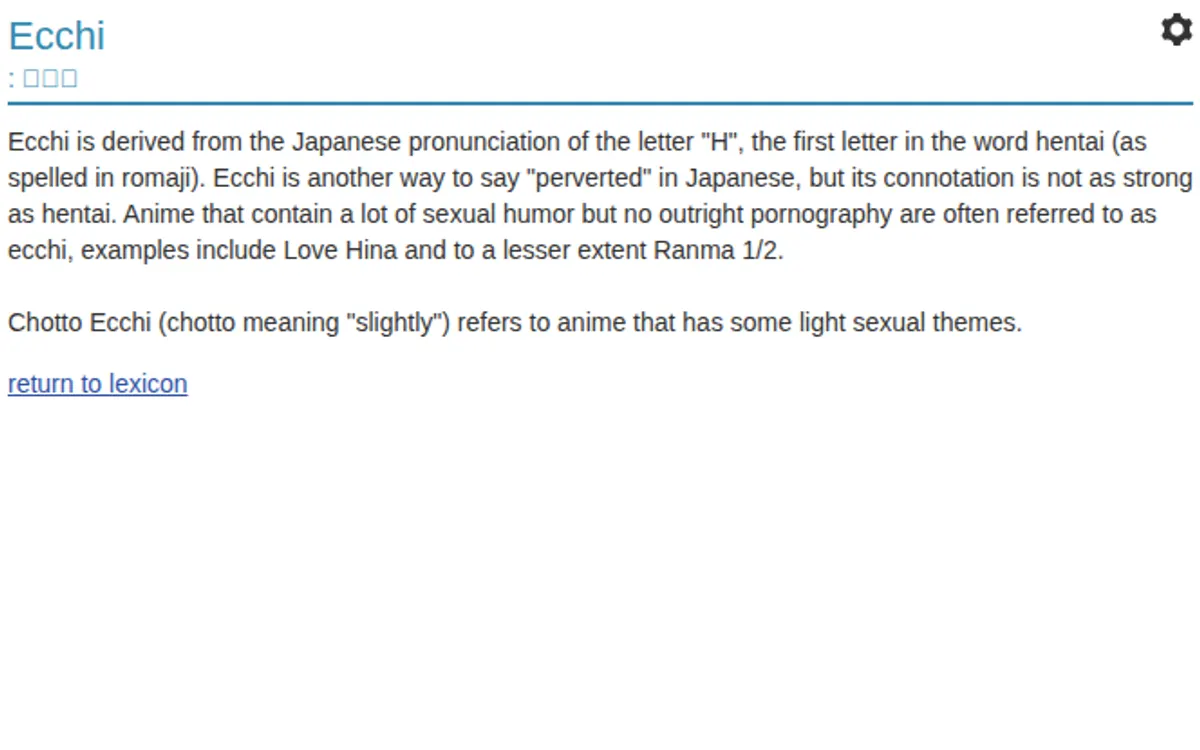
Anime News Network's lexicon derives the word from the Japanese pronunciation of H and says Ecchi is another way to say "perverted" in Japanese, but its connotation is not as strong as hentai.
As a genre label it means series with a lot of sexual humor and suggestive situations, stopping short of sex scenes.
Ecchi vs hentai
The useful difference is where each can be sold. Apple's App Store guideline 1.1.4 bans overtly sexual or pornographic material
, so an app can carry ecchi manga but not hentai. BookWalker, a mainstream manga store with its own app, lists Ecchi and Mature as genres, while explicit hentai is sold through sites such as FAKKU that have no store app.
Ecchi is also not a rating. Mild sexual content fits under ordinary store ratings: MangaToon and WebComics are both rated 12+ in the App Store with an advisory for Infrequent/Mild Sexual Content and Nudity
. How ratings work across platforms is on mature content ratings.
For more explicit reading, start with adult manga or the porn comics vs hentai comparison. Other terms are in the glossary.
FAQ
Is ecchi the same as hentai?
No. Ecchi is suggestive and comic; hentai is explicit. The Japanese word ecchi is also milder than hentai.
Is ecchi 18+?
Not necessarily. Ecchi titles are sold on mainstream stores and apps under ordinary age ratings, while explicit work sits behind an 18+ gate.
Where can I read ecchi manga?
On mainstream manga stores and apps that list it as a genre, such as BookWalker. The adult manga sites list covers the more mature end.